Why High-Traffic Community Areas Are the First to Fail Without Erosion Control in Fort Bend County, TX
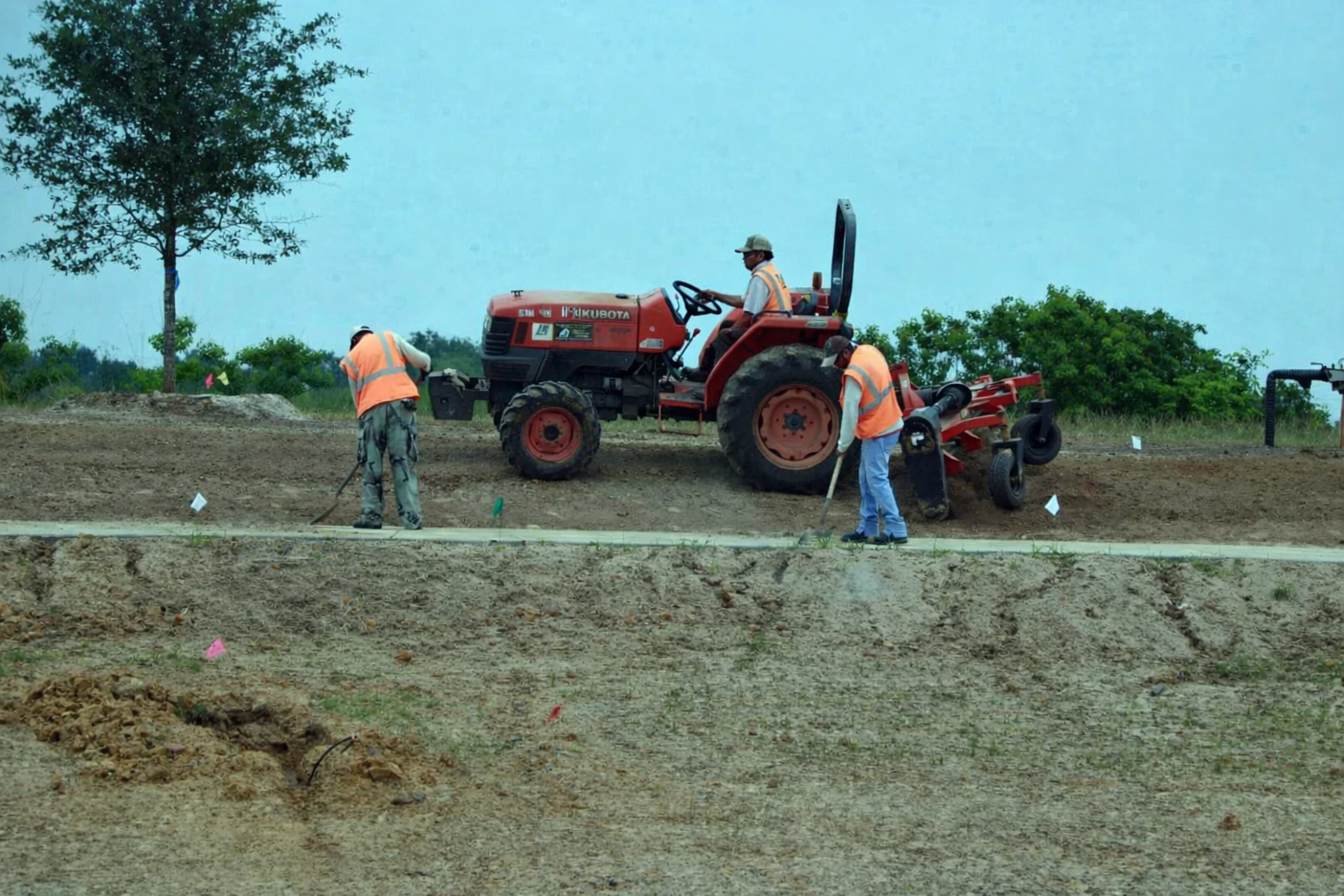
High-traffic areas take daily foot traffic, maintenance traffic, vehicle runoff, and constant compaction. In Fort Bend County, they also take intense downpours and rapid stormwater surges that move water fast and carve soil even faster. That is why erosion control in Fort Bend County, TX, is not a “nice to have” — it is the difference between a stable, functional site and recurring washouts, muddy pavement edges, and damaged turf that never fully recovers.
These popular areas are where your commercial property gets judged first and used the hardest. Think building entrances, sidewalks, dumpster enclosures, mailbox centers, clubhouse approaches, pool decks, playground perimeters, dog parks, and the edges of parking lots.
The Real Reason High-Traffic Areas Fail First
Most erosion problems start as a drainage problem, not a soil problem. In high-traffic zones, surfaces are compacted and often slightly crowned or sloped, which pushes water toward edges and low points.
When the next storm hits, runoff concentrates into small channels that cut into the soil. Once those channels form, water follows them every time, deepening the ruts and undercutting the area around them.
High-traffic areas also tend to have “hard transitions” where pavement meets turf, gravel meets soil, or curbs meet beds. Those transitions become failure lines because water accelerates off hard surfaces and hits exposed soil with force.
The result is edge erosion — the slow collapse of the lawn line, beds, or shoulders that support walkways and parking lots. Left untreated, you may notice sinking turf, cracking edges, silt on sidewalks, and bare soil that turns into mud after every rain.
Fort Bend County’s Stormwater Reality Makes It Worse
Fort Bend County’s stormwater network is designed to move water quickly, and that means properties must handle large volumes of runoff during heavy rain events.
When water can’t slow down, spread out, and soak in safely, it concentrates. Concentrated flow is what causes scouring — where fast-moving water strips away soil and exposes roots, subgrade, or unstable fill.
You also deal with sediment transport. Once erosion begins, the soil that leaves one part of your property ends up somewhere else — often clogging drains, piling up in low spots, collecting at curb inlets, or washing into detention ponds and swales.
That buildup creates another set of issues: standing water, clogged outfalls, and turf decline in areas that stay wet too long.
What Erosion Looks Like Before It Becomes “Obvious”
One reason erosion gets expensive in effort and disruption is that it is often ignored until it is visible. Our team looks for early warning signs that most property owners don’t connect to erosion:
Turf thinning along pavement edges or slopes
Repeated wash marks after storms
Mulch migration from beds onto sidewalks
Gullies forming behind curbs or near downspouts
Silt lines near drains, inlets, and curb cuts
Bare soil appears in the same place after each rain
Ponding that wasn’t there last season
These symptoms tell you water is moving with more energy than your landscape can resist.
What to Expect When You Hire Our Erosion Control Experts
When you hire our team, you are not getting a “patch-and-go” approach. You are getting a design-led plan built around how water behaves on your specific site, using proven commercial-grade erosion control methods.
Site Assessment and Drainage Mapping
We start with a full evaluation of slope conditions, runoff direction, soil structure, and stormwater collection points. Our specialists identify where water accelerates, where it concentrates, and where it exits the property. This is how we locate the true cause, not just the damage.
A Stabilization Plan Built for High-Use Zones
High-traffic areas require solutions that resist compaction, withstand wear, and continue functioning through repeated storms. We design systems that combine grading adjustments, reinforced turf areas, stabilized bed edges, and strategic drainage improvements so the site holds together long-term.
Targeted Erosion Control Measures
Depending on what your site needs, our work may include regrading and contouring to reduce water velocity. Our experts might also recommend:
Swales and conveyance shaping to guide water safely
Outlet protection at downspouts and outfalls
Riprap or rock armoring where flow energy is high
Erosion control blankets or turf reinforcement mats on slopes
Stabilized soil systems and sediment containment where needed
Improved ground cover and planting plans that strengthen soil
These aren’t generic fixes. They are selected because they match the flow pattern, slope, and use level of each area.
Professional Installation and Phased Scheduling
Commercial properties often need work completed in phases to reduce disruption. Our team coordinates installation around traffic patterns, maintenance schedules, and site access needs so your property stays operational while improvements are being made.
Long-Term Performance Support
Erosion control is only as good as its performance over time. Our experts also look at how your landscape maintenance, mowing lines, irrigation overspray, and foot traffic patterns interact with the repaired areas.
That way, the system stays stable — not just immediately after installation, but through the next storm season and beyond.
Why This Approach Works in Fort Bend County
Erosion in Fort Bend County is driven by fast runoff, heavy rainfall events, and highly used commercial spaces.
When you address the water pathway, reduce flow energy, and reinforce vulnerable zones, your property stops cycling through the same damage patterns. High-traffic areas stay firm, edges stay intact, and stormwater is handled the way your site needs it to be handled — predictably, cleanly, and consistently.
Schedule a property evaluation with our expert team at Ethoscapes today and learn more about your options for erosion control.