
Designing a Detention Pond in Brazoria County, TX, for Storm Resilience and Site Stability
Houston, TX

When heavy storms roll through the Gulf Coast, water doesn’t politely stay where it belongs. It moves across your yard, collects in low areas, softens soils, and can destabilize slopes and edges around patios, driveways, and even pool decks. A properly engineered detention pond in Brazoria County, TX, gives that stormwater a controlled place to go, reducing the chance of erosion, washouts, and chronic wet zones that make outdoor spaces feel unpredictable and difficult to maintain.
And once your site is stable and well-managed, your backyard becomes something else entirely: a space where you can enjoy a clean, beautifully maintained swimming pool, crisp lawn edges, and a landscape that stays consistent even after a hard rain—so you’re not staring at muddy runoff or soggy turf when you’d rather be outside.
What a Detention Pond Actually Does — and Why It Works Here
A detention pond is designed to temporarily store stormwater and then release it slowly through a controlled outlet. Unlike a retention pond, which holds water continuously, detention ponds are typically dry most of the time and only fill during storm events.
The purpose is to reduce peak runoff and prevent uncontrolled flow from rushing across the site or overwhelming nearby drainage paths. The Environmental Protection Agency notes detention basins are widely used for stormwater control, especially for larger drainage areas, because they slow and manage runoff volume during storms.
In Brazoria County, that matters because heavy rainfall, clay-heavy soils, and low-lying terrain can create fast saturation, pooling, and erosion pressure on landscape features.
When water is managed correctly, you’re not just solving a drainage issue—you’re supporting long-term stability across the entire property.
What Makes Detention Pond Design Successful (and Why It’s Not “One Size Fits All”)
A detention pond isn’t a decorative feature—it’s an engineered solution. The success comes down to a few critical design factors that must be tailored to your specific site:
1. Grading and Flow Pattern Mapping
Before any excavation begins, our team studies how water currently moves across your property. That includes elevation shifts, slope direction, natural collection points, and where runoff accelerates during storms.
Our Ethoscapes experts take a proactive water management approach, using proper grading and placement to determine whether stormwater features work with the site’s hydrology or fight against it.
A detention pond must be positioned where water naturally wants to go—but refined so it doesn’t disrupt lawn areas, pool access, or outdoor living zones.
2. Basin Shape, Depth, and Storage Volume
The pond must be sized to hold stormwater volume from specific rainfall events. That includes calculating how much runoff your rooflines, hard surfaces, turf, and surrounding terrain contribute during heavy storms.
Texas DOT notes that detention is commonly required or encouraged in Texas drainage design to manage increased runoff rates and volumes, especially as land changes.
The basin shape also matters. A pond that’s too shallow may overflow too quickly. Too steep, and it becomes difficult to stabilize with vegetation.
3. Outlet Control and Release Timing
Detention ponds work because they release water slowly. That release rate depends on outlet structures designed to control flow under normal and intense rainfall events.
Industry engineering guidance consistently emphasizes that outlet design and overflow routing are just as important as basin size because they prevent unexpected discharge paths and downstream erosion.
4. Side Slopes That Resist Erosion and Collapse
Slope stability is a major factor in Brazoria County conditions. A pond built with slopes that are too steep can erode, slump, or fail to hold vegetation.
Our specialists design side slopes that support long-term stability and make it possible to maintain the pond edges as part of the surrounding landscape.
How a Detention Pond Supports Pool Areas and Outdoor Living Spaces
When you’re investing in a swimming pool and outdoor living space, you want it to feel clean, stable, and predictable. Standing water and soil movement can cause problems around pool decking, drainage channels, and planting beds, especially after intense storms.
A well-designed detention pond helps by:
- Redirecting stormwater away from pool zones and patios
- Preventing runoff from cutting through turf or planting beds
- Reducing saturation that can cause soil shifting near hard surfaces
- Creating a reliable system for where water goes during storms
That means your outdoor space stays usable and easier to maintain. Instead of worrying about muddy edges or soft spots, you can focus on what you actually want—enjoying a pool that looks sharp, feels like a resort setting, and stays surrounded by clean lines and healthy planting beds.
What You Can Expect When You Hire Our Expert Team
Detention pond work requires precision and planning—not guesswork. When you hire our experts, you can expect a design and construction process that’s built around performance first, with landscape integration as part of the plan.
1. Site Analysis and Drainage Review
We evaluate existing grades, soil behavior, water collection zones, and how runoff moves during storm events.
2. Engineered Design and Layout Planning
Your pond design is customized to your property’s needs—capacity, location, and outlet strategy—so it supports long-term stability.
3. Excavation and Structure Installation
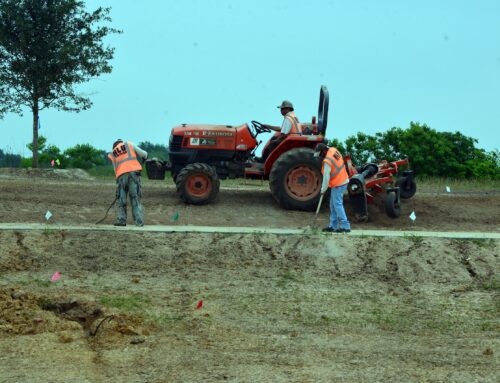
We build the basin, shape it correctly, install outlet components, and ensure the pond functions properly during both moderate and intense storms.
4. Landscape Integration and Stabilization
We finish the pond edges and surrounding zones with stabilization methods and plant choices that support drainage performance and help the feature blend naturally into your overall landscape.
Ready to explore design options for a detention pond on your property? Schedule a design consultation with our Ethoscapes team.